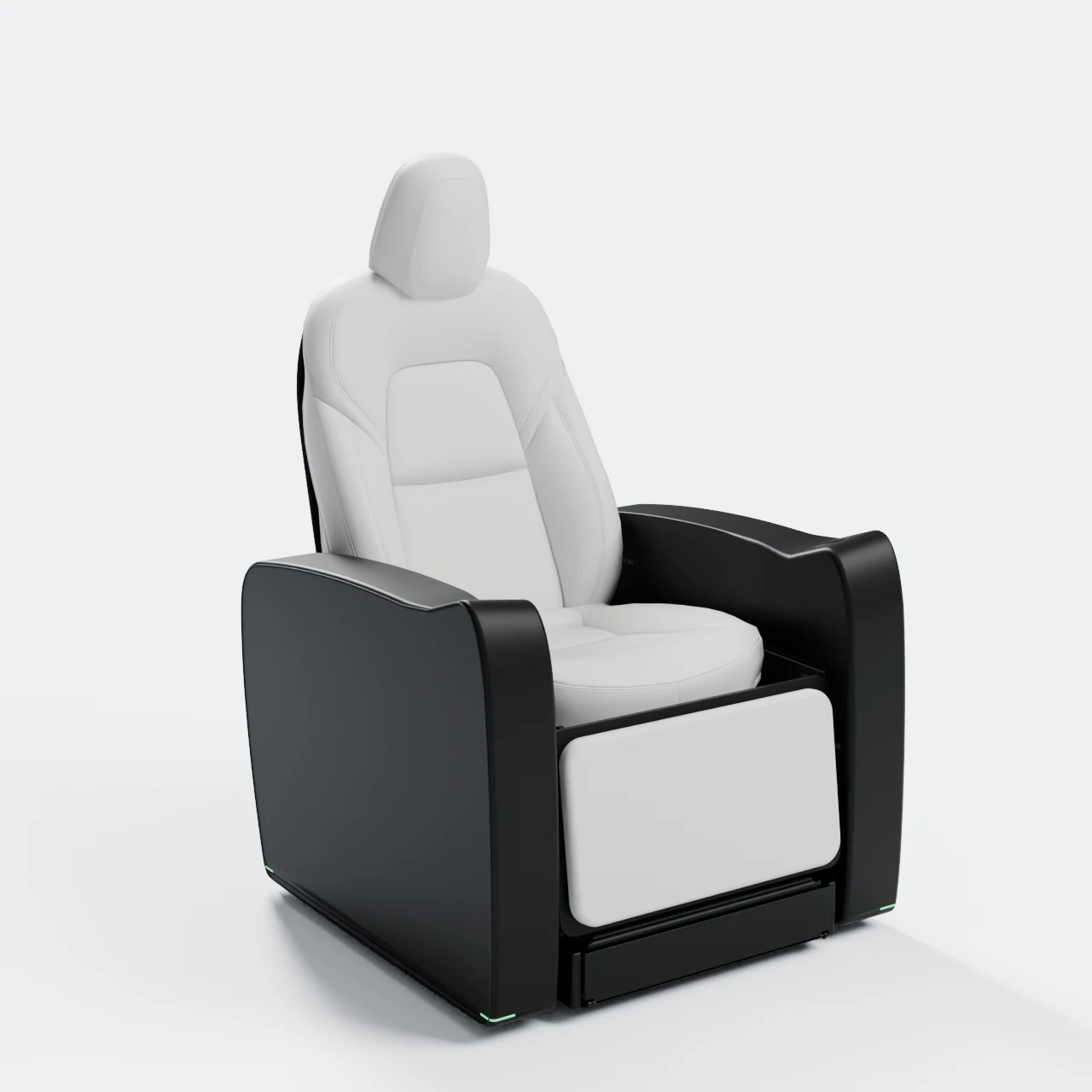
Motion and airflow with a film
Gently move the seat and send airflow from the armrests while watching a journey along the coast. We will test how these combinations affect the experience.
Motion, vibration, airflow, and sound in one device. We are currently developing a chair prototype.
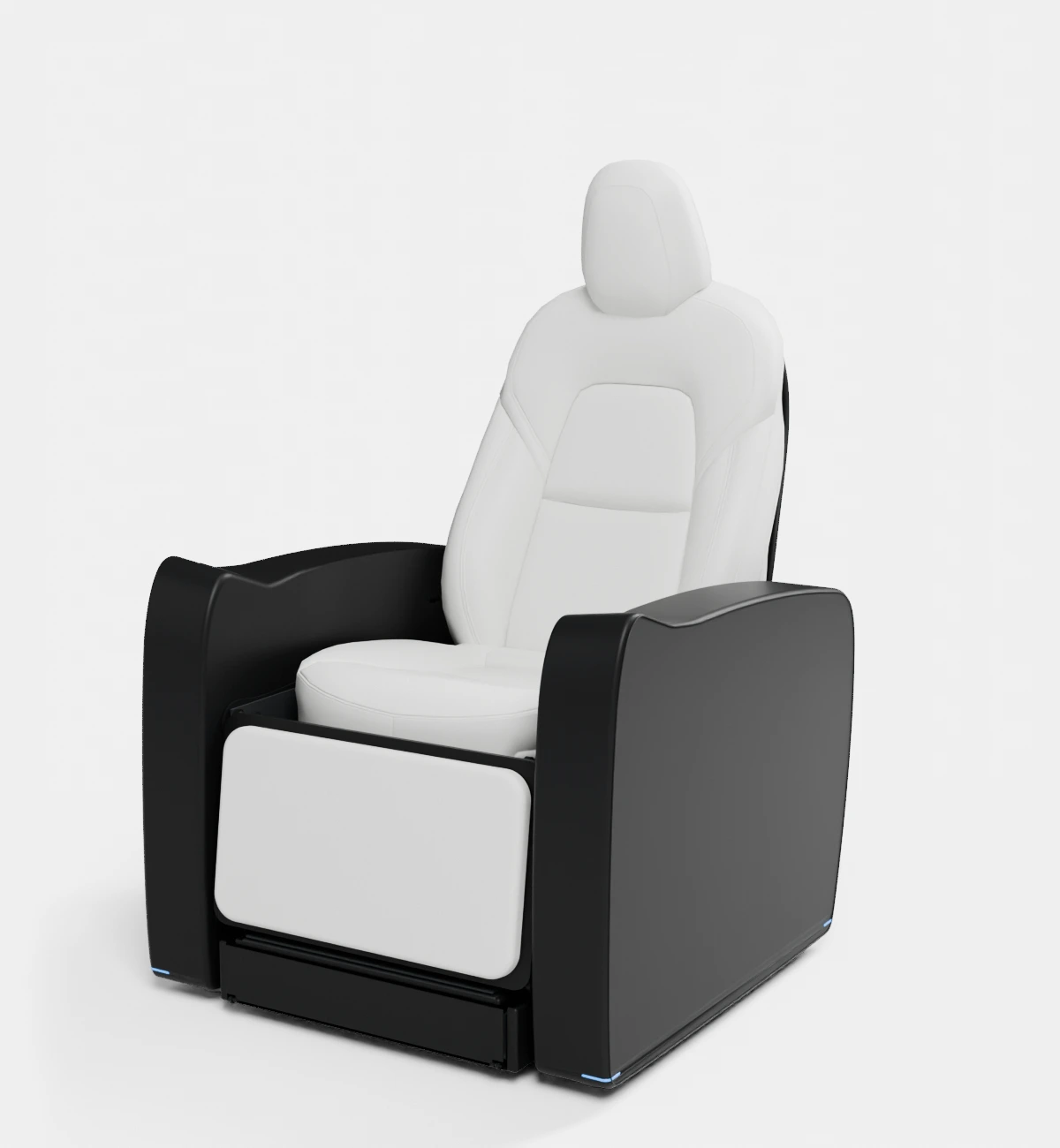
The design combines seat motion, vibration, airflow, and temperature changes. Explore movement and component placement in CG.
Choose which sensations to display. You can select more than one.
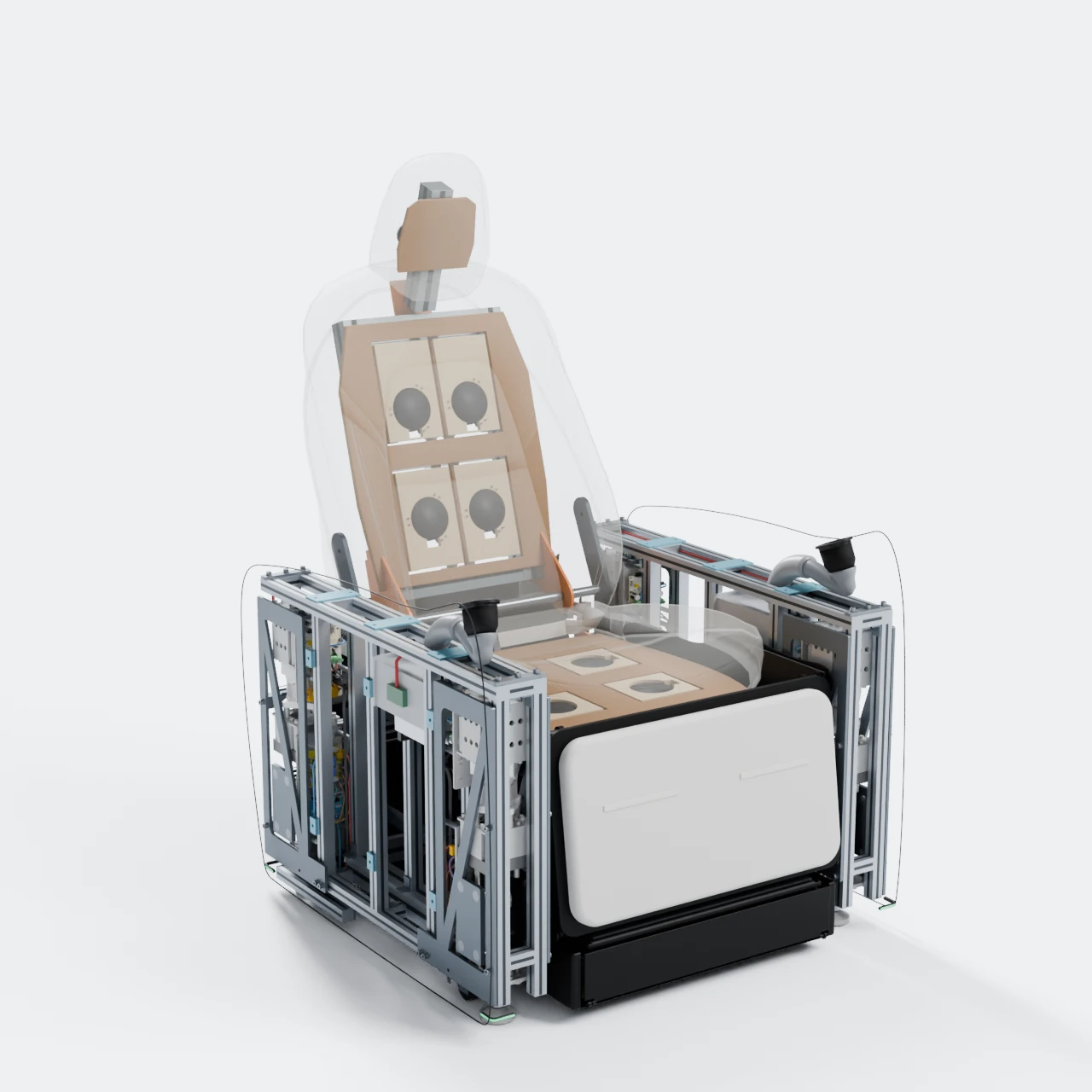
Chair prototype
Vibration illustrationCool airflowWarm airflow
This is a design illustration. Physical testing will establish how the outputs feel and how strong they should be.
Combining film or sound with motion, vibration, and airflow can change how an experience feels. Crossmodal perception, which concerns relationships between the senses, is one of the ideas informing our design.
We will use physical testing to explore which combinations are useful in particular situations.
We are designing the chair for use in front of a TV or monitor, as well as with a head-mounted display (HMD). Motion, vibration and airflow can accompany the visuals.
We will also evaluate operating noise, vibration transmitted to the floor, wiring, and everyday controls for home use.
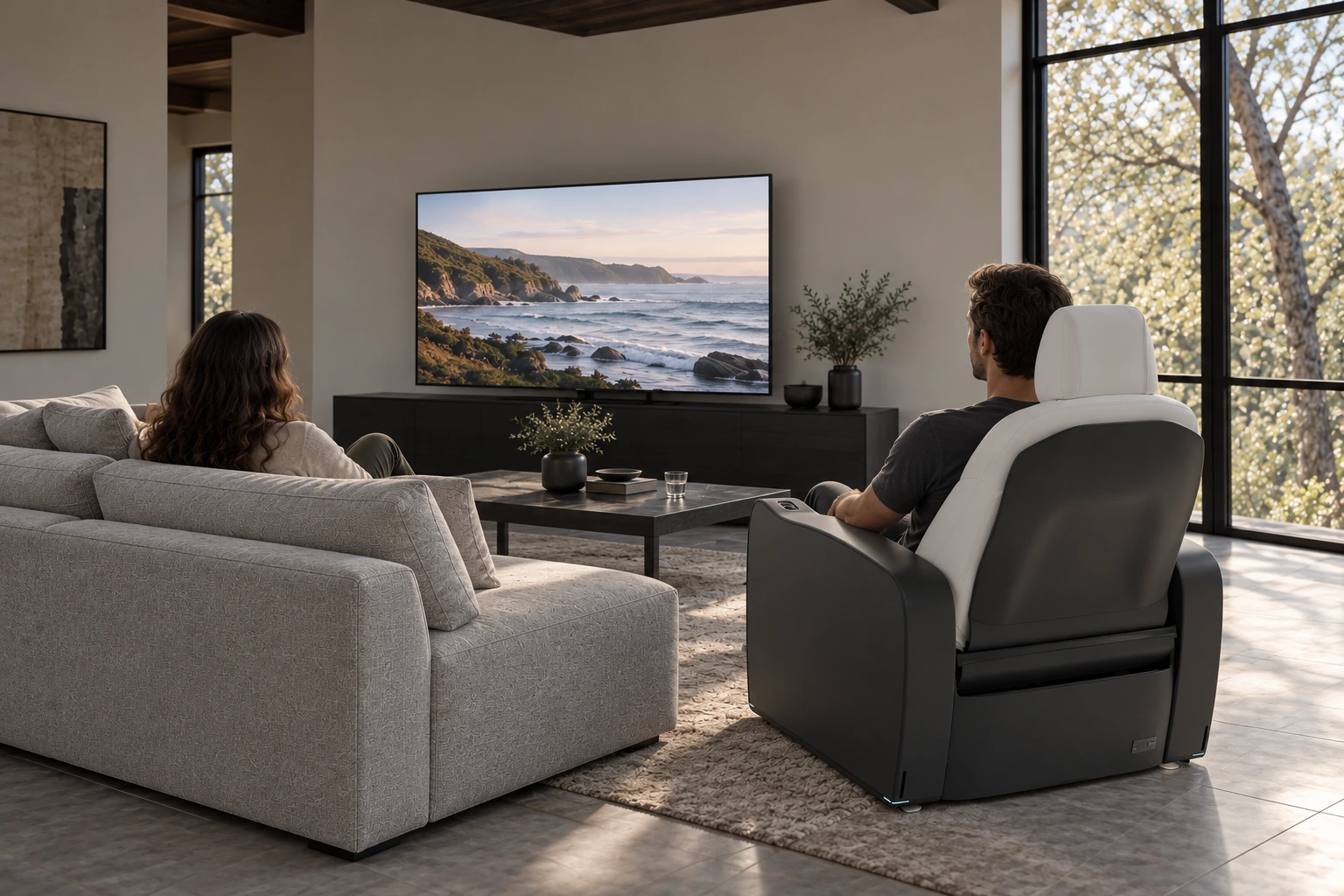
For watching a film or playing a game in the living room. We are exploring how chair movement, vibration and airflow can accompany what is happening on the TV.
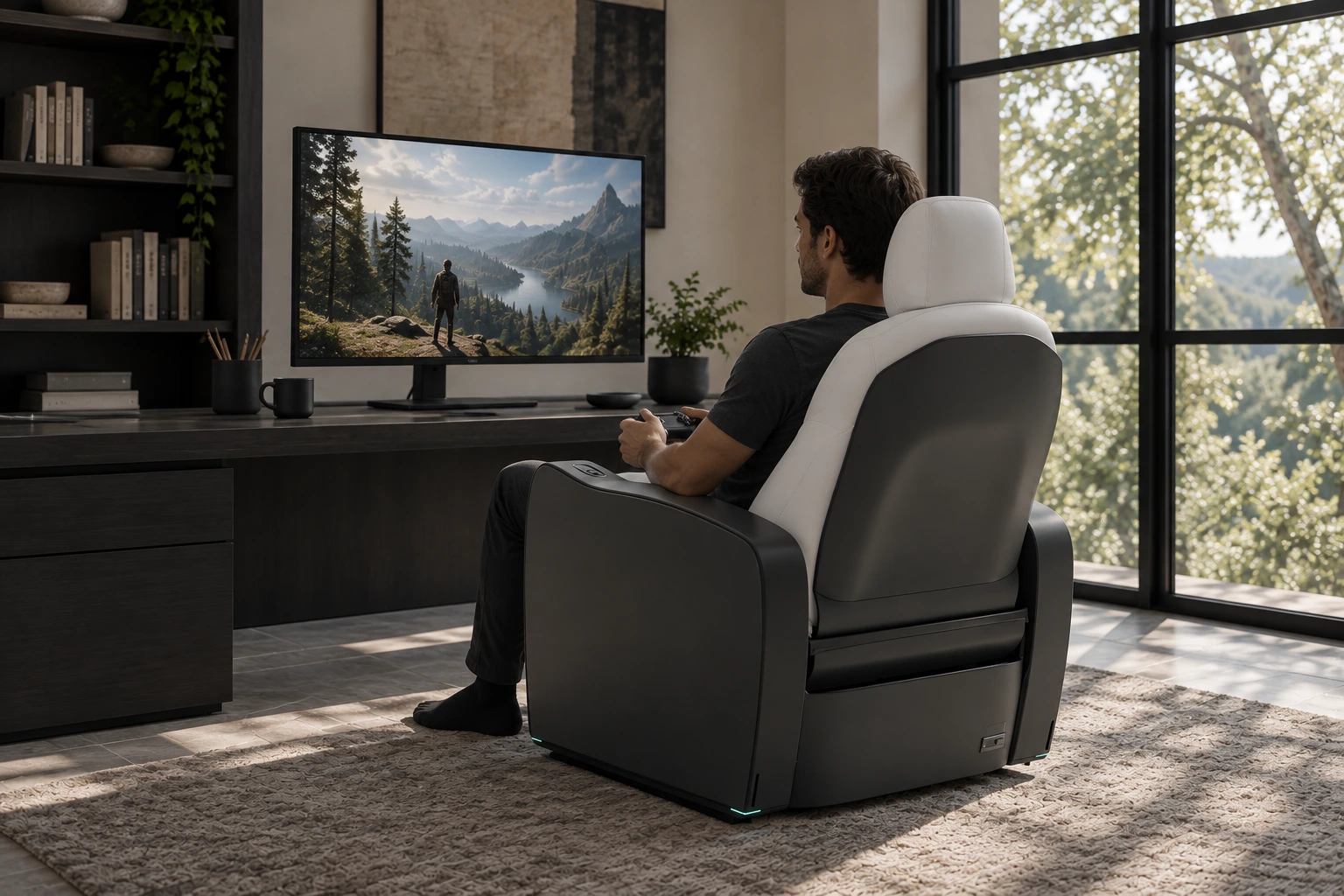
For games and videos on a desktop monitor. We envisage placing the chair in front of a desk and using it with a controller or other input devices.
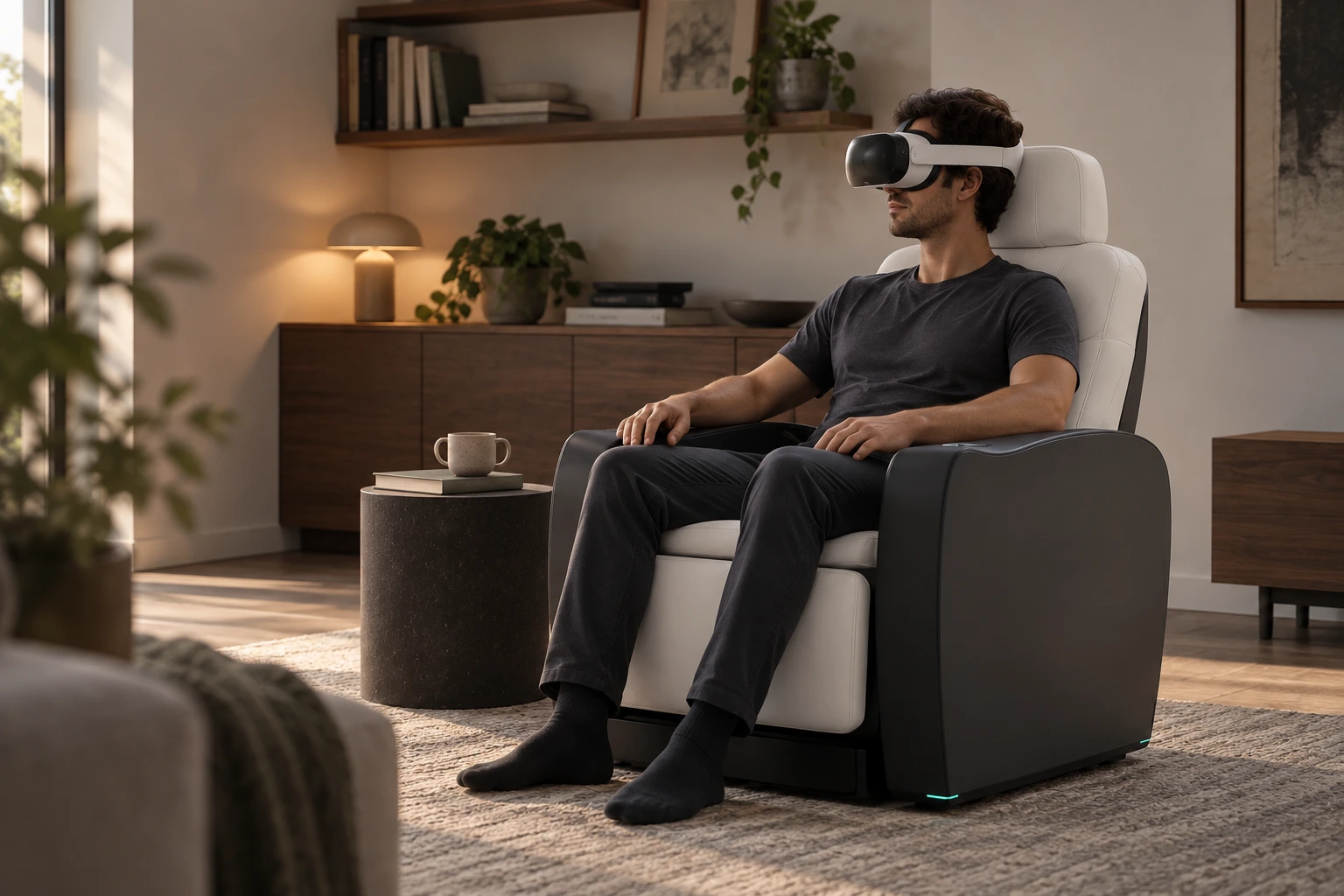
We also envisage enjoying VR with an HMD. We are exploring experiences that combine changes in the view with chair movement, vibration and airflow.
For both screen-based and HMD use, we envisage audio through the chair’s speakers or through headphones, alongside vibration from the seat and backrest.
AI-generated illustrations of intended use, not photographs of a working prototype. Supported devices and connection methods are still being considered.
We will explore the timing and intensity that make these combinations feel natural, as well as how they differ from watching a film alone.
Gently move the seat and send airflow from the armrests while watching a journey along the coast. We will test how these combinations affect the experience.
We are considering seat and backrest vibration that follows the rhythm and bass of music.
We are also exploring motion and airflow that follow actions such as moving, turning, and stopping in a game.
These are examples for development. Supported content and services have not been determined.
Explore the features and mechanismsWe are designing the seat, armrests, and the exterior around the mechanisms. These images are renders of the current model.
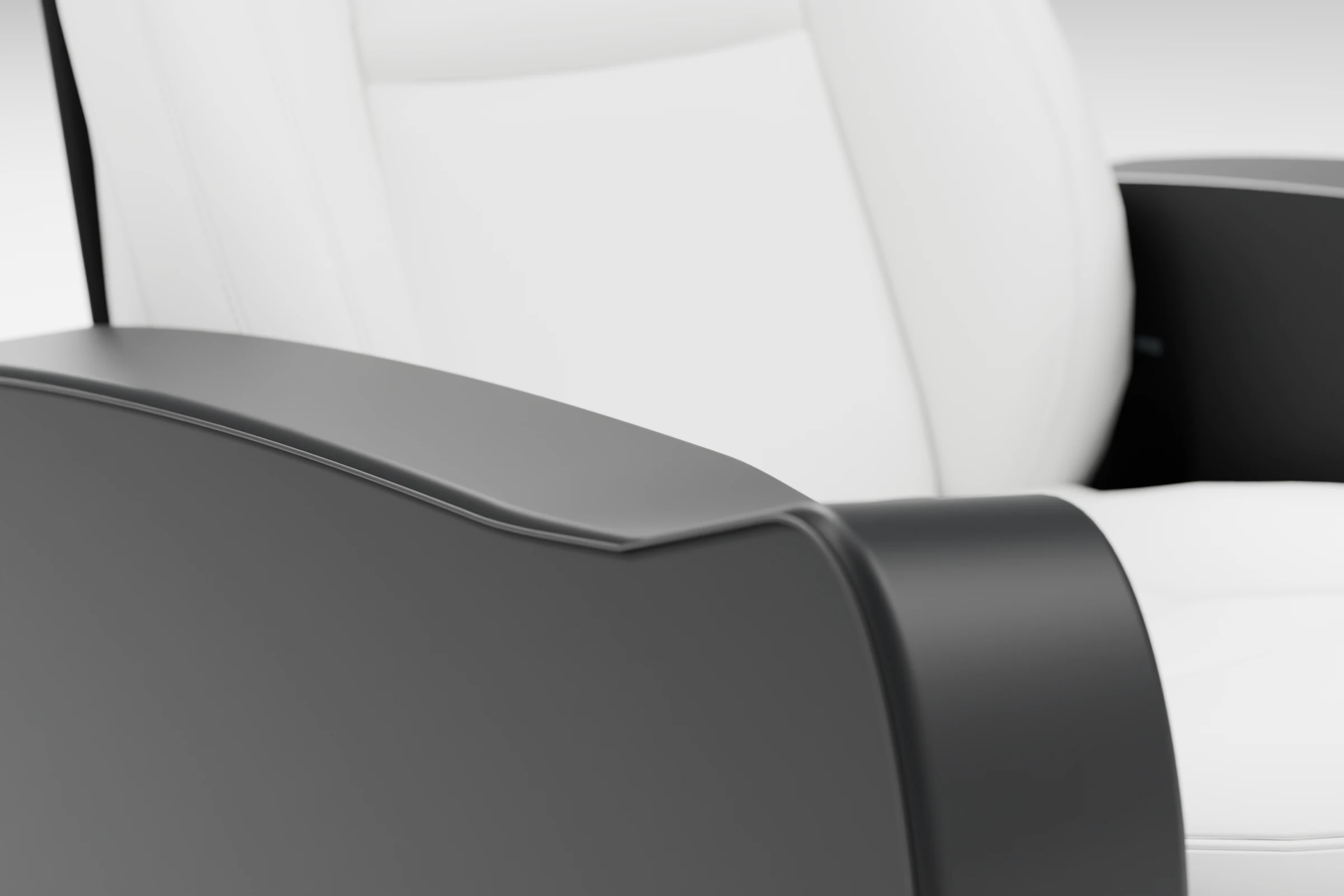
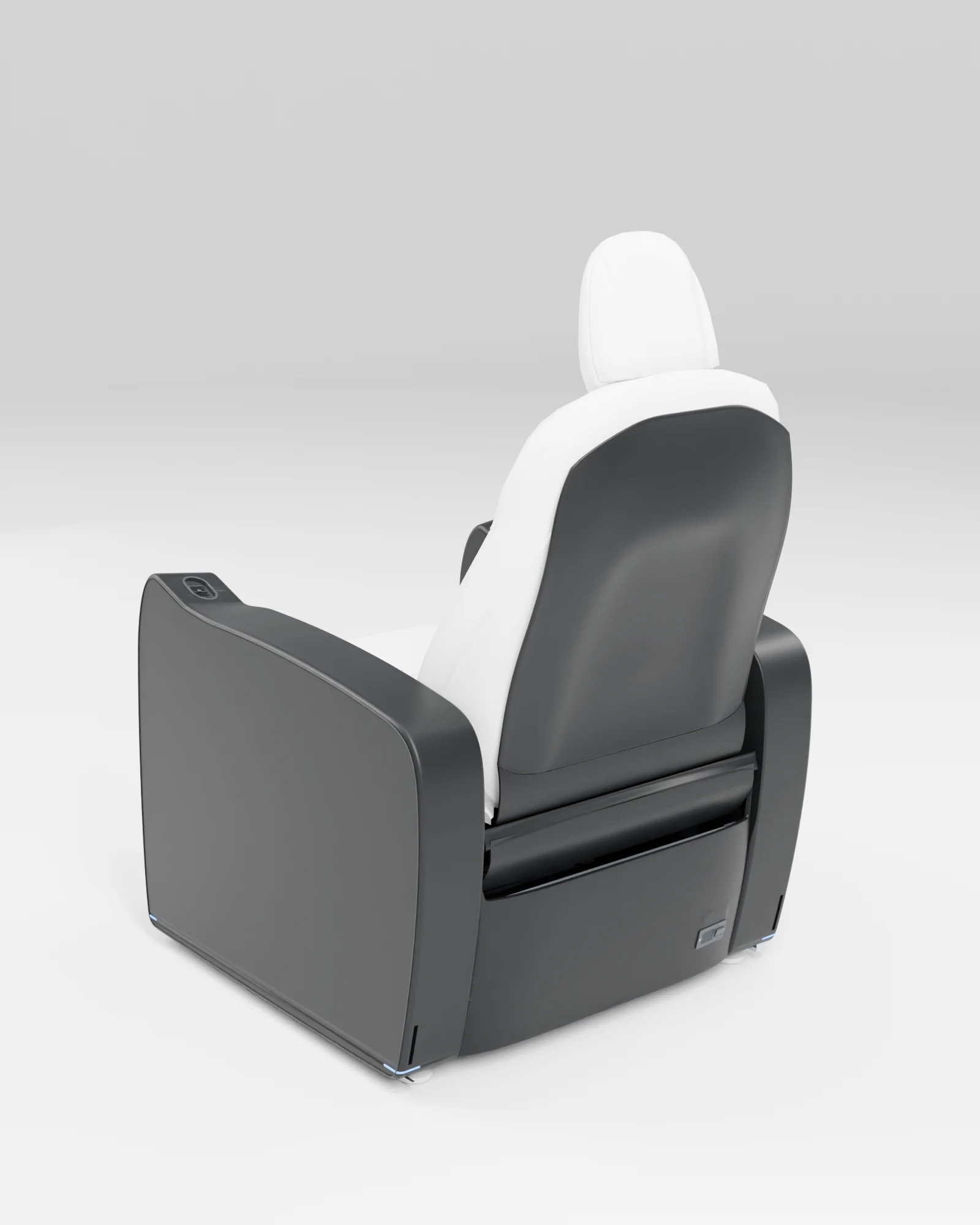
We have built chair prototypes and tested motors and control electronics. We are using that work to develop the exterior, internal layout, and additional sensory outputs.
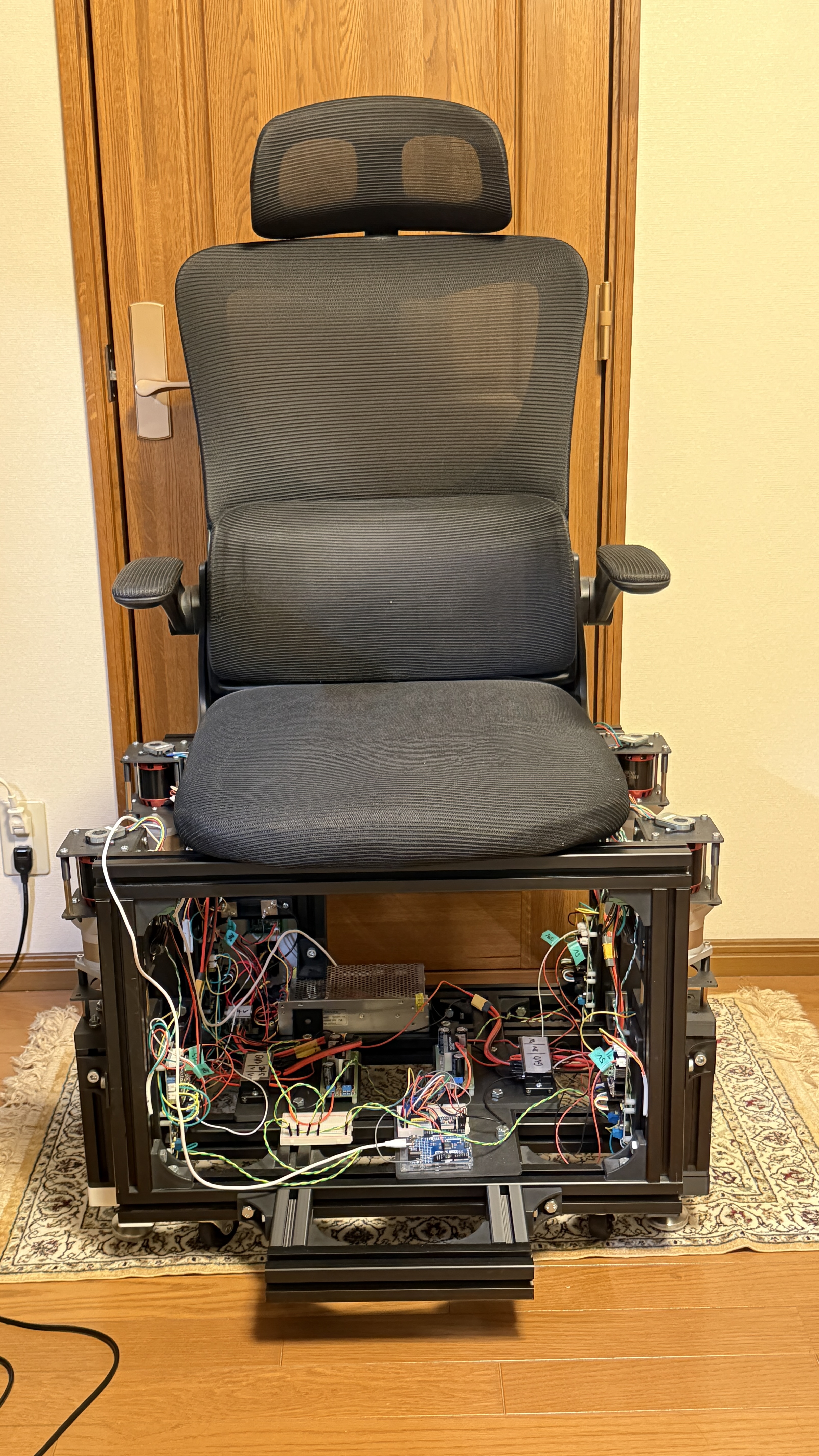
An earlier physical prototype used to check seat movement and control.
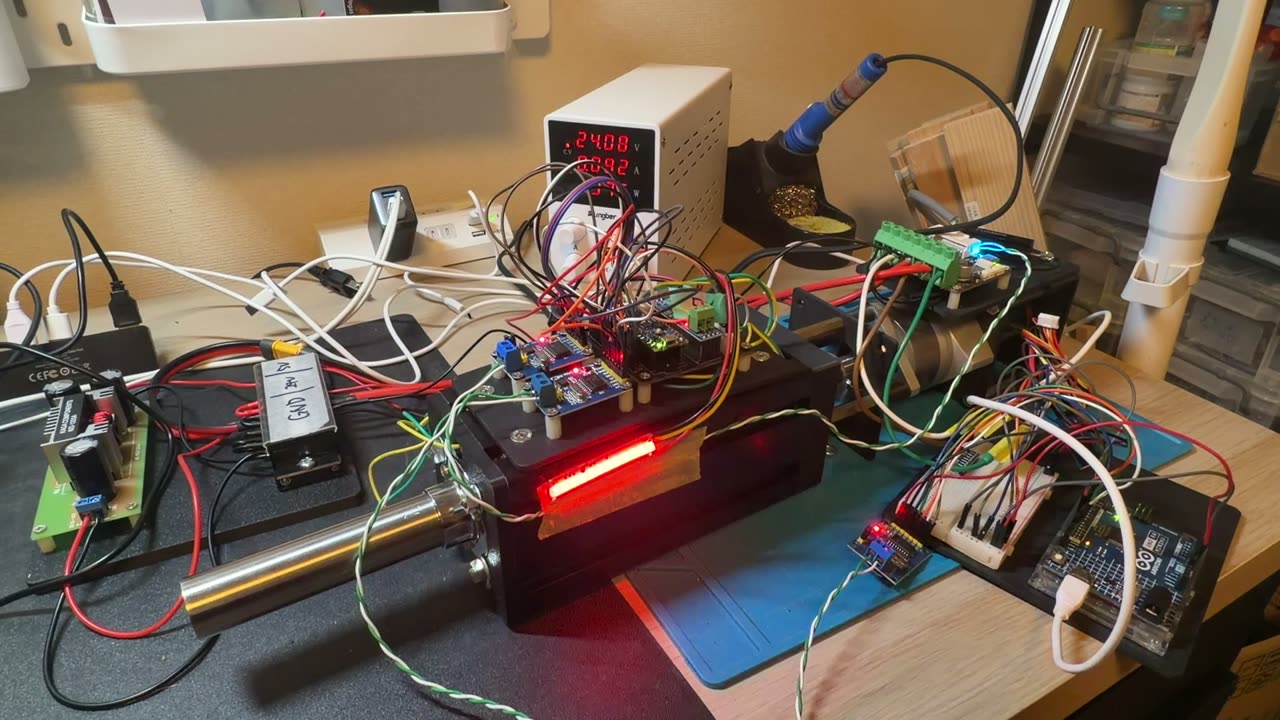
Testing motors, power supplies, and control circuits. Video analysis and motion generation software are also in development.
Vary the timing and intensity of motion, vibration, and airflow to compare how they feel.
Evaluate required space, operating noise, floor vibration, wiring, and controls.
Build and try short experiences to explore when people would want to use the device at home.
Get in touch about developing the hardware or control software together, creating and evaluating experiences, or supporting development.
We also welcome ideas about when you would use the device and questions about putting it in your home.